
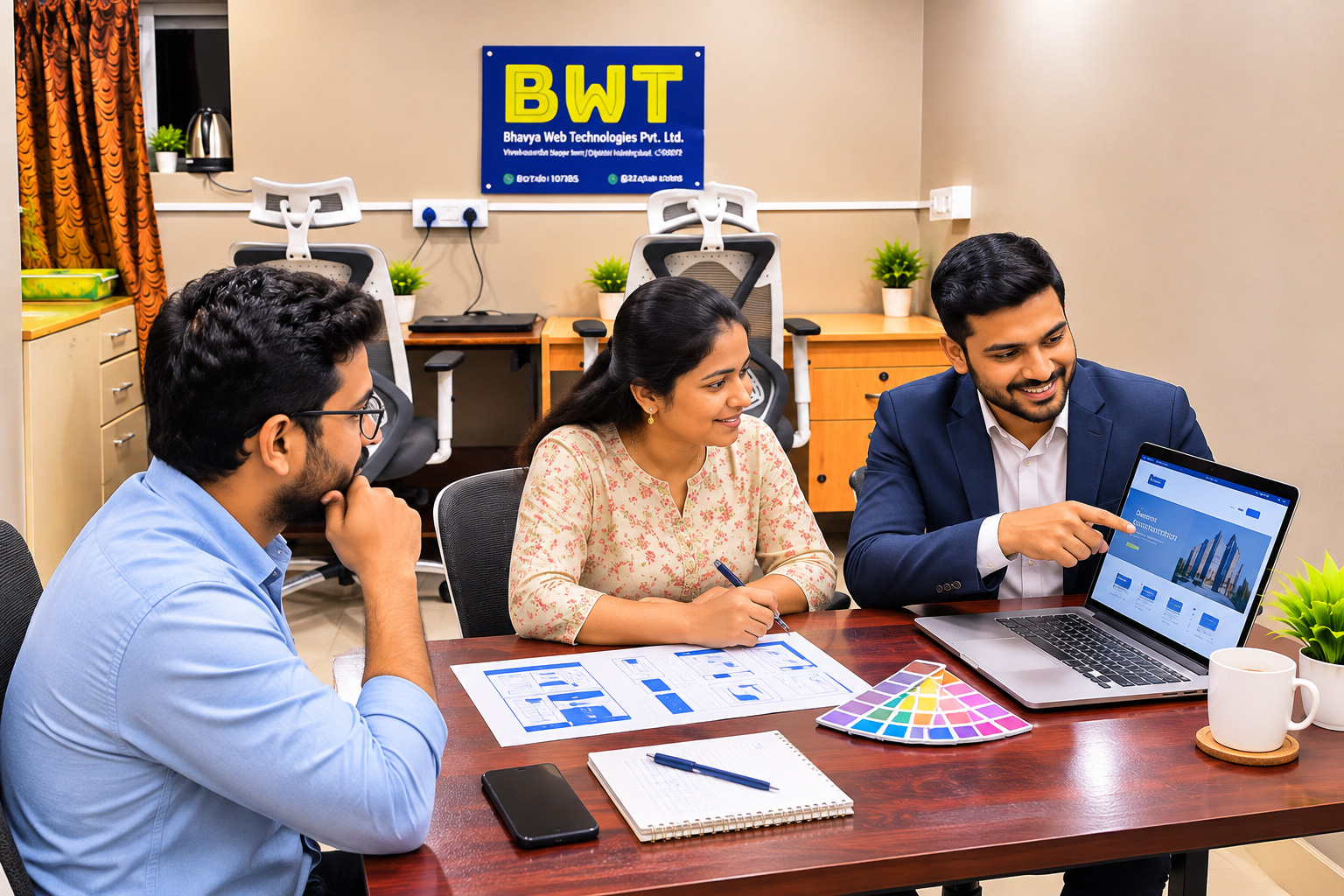
A business website plays an important role in establishing credibility, presenting services and connecting with potential customers.
For many people, it is the first place they visit to understand what a company offers and whether its services match their requirements.
Creating an effective website requires more than selecting an attractive design. It involves understanding business objectives, planning the user experience and choosing suitable technology.
With several agencies and independent developers offering website services, selecting the right web design company in Hyderabad requires careful consideration.
This guide explains the important factors to consider when selecting a web design partner for your business.
A well-defined project scope helps the development team recommend an appropriate solution.
2. Review the Company’s Website Portfolio
A company’s portfolio provides useful insight into its design capabilities and development experience. Before selecting an agency, review its completed projects and examine how different websites are structured.
Look beyond the appearance of the homepage. Visit individual pages and evaluate the navigation, content presentation, mobile experience and overall usability.
Consider these questions:
A portfolio should help you understand the agency’s practical capabilities and whether its approach matches your project expectations.
3. Evaluate Technical Expertise and Platform Knowledge
The technology used to build your website can influence its flexibility, maintenance requirements and future development possibilities.
A capable web design company should understand different platforms and recommend technology according to the project’s requirements.
For example:
WordPress: Suitable for business websites, service pages, blogs and content-managed websites.
Shopify: Useful for businesses looking to launch and manage online stores.
WooCommerce: Provides ecommerce functionality within WordPress websites.
React and Next.js: Suitable for interactive websites and custom digital experiences requiring modern frontend development.
Custom Development: Appropriate when a project requires specialised functionality, integrations or workflows.
The right platform depends on your business model, content management needs, technical requirements and expected growth. Avoid choosing technology simply because it is popular.
4. Check Mobile Responsiveness and User Experience
Customers may access your website through smartphones, tablets, laptops and desktop computers. Your website should provide a consistent and convenient experience across these screen sizes.
Mobile responsiveness is therefore an essential part of professional website development.
Check whether the company considers:
Flexible layouts for different screen sizes
Readable typography and appropriate spacing
Mobile-friendly navigation
Properly sized buttons and clickable elements
Optimised images and media
Consistent page structure across devices
User experience also matters. Visitors should be able to understand your services, locate important information and contact your business without unnecessary effort.
5. Understand the Company’s SEO Approach
A website should be developed with search visibility in mind. Although SEO results depend on several factors and cannot be guaranteed by a web design company, a technically sound website provides a useful foundation for future optimisation.
Ask the agency how it handles basic SEO requirements during development.
Important areas include:
If organic search traffic is important to your business, discuss how website development and ongoing SEO activities can work together.
6. Discuss Website Speed and Performance
Website performance influences how visitors experience your business online. Slow-loading pages can make navigation frustrating and may discourage people from exploring your services.
Ask the development team about its approach to performance optimisation.
A well-planned website may include compressed images, efficient code, suitable caching, optimised scripts and reliable hosting configuration.
You can also request a demonstration or performance review of previously developed websites. Tools such as Google PageSpeed Insights can help identify performance opportunities.
Remember that speed depends on multiple factors, including hosting, third-party integrations, website content and ongoing maintenance.
7. Ask About Project Management and Communication
Website development involves several stages, from requirement gathering and design approval to development, testing and launch.
Clear communication helps keep the project organised and reduces misunderstandings.
Before signing an agreement, understand how the company manages its projects.
Discuss the following:
A structured development process makes it easier to track progress and maintain clarity throughout the project.
8. Compare Pricing and Project Deliverables
Website development costs can vary depending on the number of pages, design complexity, platform, integrations and custom functionality.
When reviewing quotations, do not focus only on the final price. Understand exactly what each proposal includes.
Ask whether the quotation covers:
Also clarify whether domain registration, hosting, premium plugins, themes or third-party subscriptions are included or charged separately.
A detailed quotation makes it easier to understand the actual scope of work and plan your website investment.
9. Check Website Ownership and Security
Your business should retain appropriate control over its website and digital assets.
Before starting the project, clarify who will own and manage the domain, hosting account, website files, database, premium licences and other project-related assets.
Security should also be part of the development discussion.
Depending on the platform and project requirements, this may include SSL configuration, secure administrator access, software updates, backups, spam protection and access management.
Make sure the company explains how the website will be handed over after completion and what access credentials you will receive.
10. Evaluate Maintenance and Technical Support
Launching a website is not necessarily the end of the development process. Websites may require updates, content changes, security checks, performance improvements and technical troubleshooting.
Ask whether the company provides website maintenance or an annual maintenance contract.
Understand the support arrangements, including:
Having a clear support arrangement can help your business manage its website more confidently after launch.
11. Look for a Company That Understands Your Business
A website should communicate your business clearly. The development team needs to understand your services, audience, industry and business objectives before proposing a design.
During the initial discussion, explain your business model and the type of visitors you want to attract.
A suitable web design partner should ask relevant questions about your customers, service offerings, competitors, brand identity and conversion goals.
This understanding helps the team plan meaningful website sections, useful navigation and relevant calls to action.
Choose Bhavya Web Technologies for Your Website Project
Bhavya Web Technologies Pvt. Ltd. is a digital solutions company based in Kukatpally, Hyderabad. The company works across website design, UI/UX, web and application development, ecommerce solutions, digital marketing, branding and website maintenance.
Its technology capabilities include WordPress, Shopify, WooCommerce, React.js and Next.js, among other platforms and development technologies. The company focuses on creating user-oriented digital experiences through strategic design and scalable technology.
If you are planning a new business website, redesigning an existing platform or developing an ecommerce solution, discuss your requirements with the team.
Website: https://bhavyawebtech.com/
Location: Kukatpally, Hyderabad, Telangana
Call / WhatsApp: +91 80740 10785
Conclusion
Choosing the right web design company in Hyderabad is an important business decision. The ideal development partner should understand your objectives, demonstrate relevant technical capabilities, communicate clearly and provide a website solution that supports your business requirements.
Take time to review portfolios, discuss project deliverables, understand pricing and clarify post-launch support. A well-planned selection process can help you invest in a website that represents your brand professionally and provides a strong foundation for your digital activities.
Ready to plan your business website? Contact Bhavya Web Technologies and discuss your website requirements with the team.
Frequently Asked Questions
1. How do I choose the best web design company in Hyderabad?
Review the company’s portfolio, technical expertise, client feedback, development process, pricing transparency and post-launch support. Select a team that understands your business requirements.
2. How much does website design cost in Hyderabad?
Website design costs depend on the number of pages, design complexity, platform, custom features and integrations. Request a detailed quotation based on your project scope.
3. Which platform is suitable for a business website?
WordPress is suitable for many content-managed business websites. Shopify and WooCommerce are popular ecommerce options, while React and Next.js can support custom interactive experiences.
4. How long does it take to develop a business website?
The timeline depends on the project scope, content readiness, design approvals and required functionality. A basic website may take less time than a complex ecommerce platform or custom application.
5. Does a web design company provide website maintenance?
Many web design companies offer maintenance services covering updates, backups, security checks and technical support. Confirm the exact services and charges before starting the project.