
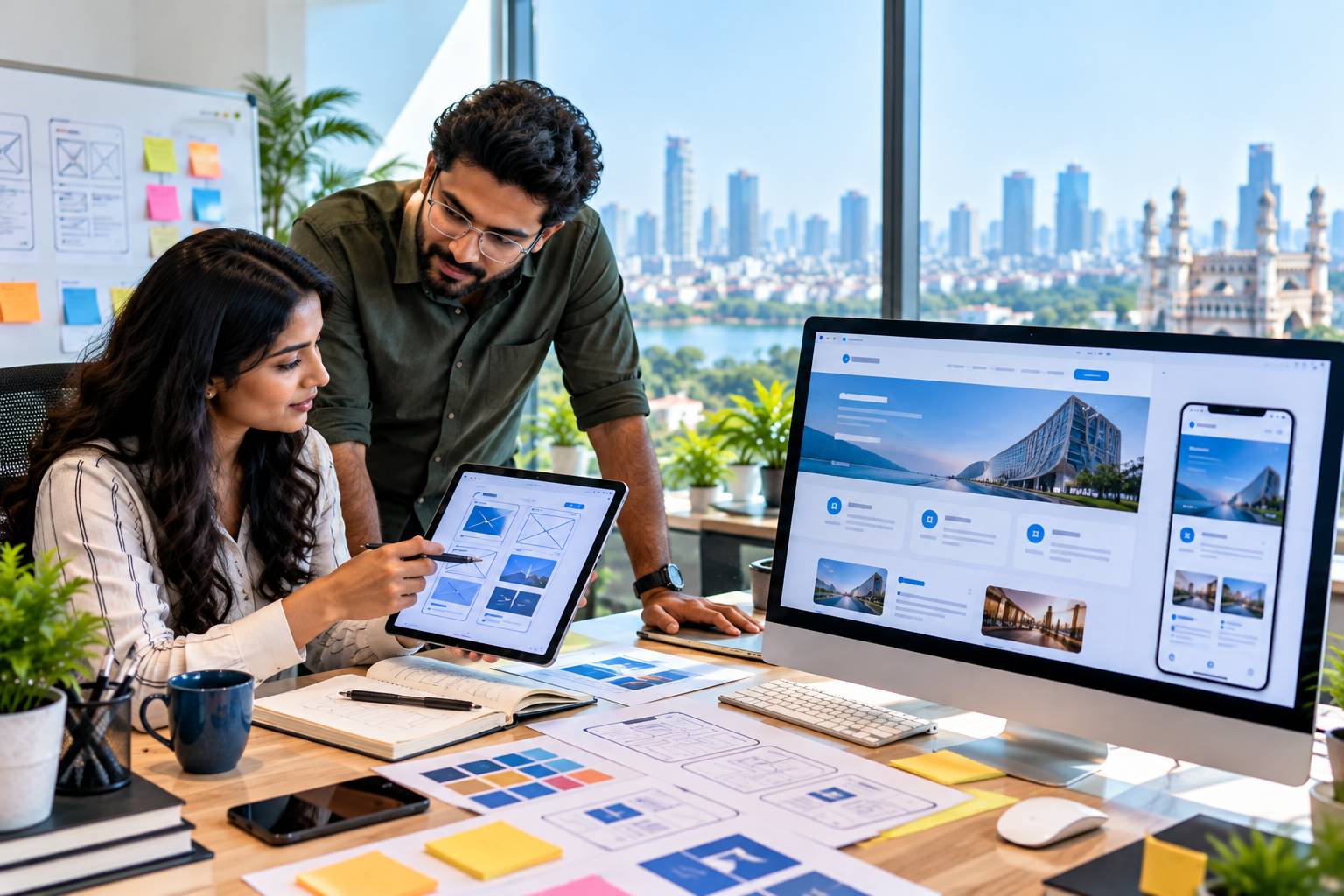
A professional website helps people understand your business, evaluate your services, and decide whether to contact you. For companies operating in competitive markets, effective website design combines visual identity, clear communication, intuitive navigation, responsive layouts, and reliable performance. Choosing professional web design services in Hyderabad can help businesses create a digital presence that supports customer engagement and long-term growth.
Bhavya Web Tech provides web design and digital solutions for businesses seeking modern, user-focused online experiences. Whether you need a corporate website, a service-based business website, an eCommerce store, or a redesign of an existing platform, the process should begin with your business objectives and customer expectations.
Why Professional Website Design Matters
Your website often introduces potential customers to your brand before they speak with your team. Visitors need to understand what you offer, who you serve, and how to take the next step without searching through confusing menus or unnecessary content.
Professional design establishes a consistent visual language through typography, colours, imagery, spacing, and page layouts. These elements should reflect your brand while keeping important information easy to find.
A well-planned website also supports business activities. It can generate enquiries, showcase products, explain services, publish useful resources, and guide visitors towards purchases or consultations. Explore our website design services to learn more about building a professional online presence tailored to your business goals.
Custom Website Design for Different Business Needs
Every business has different goals, audiences, and operational requirements. A suitable website should reflect those differences rather than rely on a generic layout that does not fit the organisation.
Corporate website design
Corporate websites communicate a company’s services, expertise, values, and contact information. Clear service pages, organised navigation, professional imagery, and accessible contact options help visitors understand the organisation and evaluate its offerings.
Small business website design
Small businesses often need a focused website that explains their services, answers common questions, and makes contacting the business straightforward. Prioritising essential pages can help create a professional online presence without unnecessary complexity.
eCommerce website design
Online stores need more than attractive product pages. Category navigation, product information, search and filtering, cart functionality, checkout usability, payment integration, and mobile performance all contribute to the shopping experience. Our eCommerce website design solutions can be explored alongside other digital services to identify the right approach for your online business.
Website redesign
A redesign can address outdated layouts, confusing navigation, inconsistent branding, or usability problems. Before replacing an existing website, review its important pages, useful content, search visibility, and conversion paths. Preserve valuable URLs where possible and plan appropriate redirects whenever URLs must change.
UI/UX Design: Put the Visitor First
User interface and user experience design help determine how people interact with a website. Effective UI/UX planning begins with understanding visitor needs and mapping the actions they want to complete.
For example, a service-based business may need visitors to explore service details, review relevant information, and request a consultation. An online store may need a shorter path from product discovery to checkout.
Wireframes help establish page structure before detailed visual styling begins. Prototypes allow stakeholders to review navigation, content hierarchy, and interaction patterns before development progresses. These activities are important parts of UI/UX design services and can reveal usability problems early.
Readable typography, consistent buttons, clear headings, meaningful imagery, and accessible colour contrast contribute to a comfortable experience. The goal is not to add visual effects everywhere. It is to make the website understandable, useful, and consistent with the brand.
Responsive Web Design for Mobile and Desktop
Visitors access websites using smartphones, tablets, laptops, and desktop computers. Responsive web design adapts page layouts to different screen sizes so that content remains readable and interactions remain practical.
Mobile-friendly design includes more than shrinking a desktop layout. Navigation should be easy to use with touch, forms should be comfortable to complete, and buttons should have sufficient space. Images and other media should fit their containers without creating horizontal scrolling.
Test important pages across representative screen sizes and browsers. Check menus, enquiry forms, product displays, tables, pop-ups, and checkout steps. A responsive website should preserve its essential functionality regardless of the device being used.
Website Speed, Performance, and Technical Quality
A visually attractive website can still frustrate visitors if pages load slowly or interactions fail. Performance should be considered during design and development rather than treated as a final adjustment.
Optimised images, efficient code, suitable caching, and carefully selected third-party scripts can help improve loading behaviour. Developers should also assess layout shifts and responsiveness to user interactions.
Technical quality includes working navigation, valid forms, appropriate error messages, secure connections, and compatibility with commonly used browsers. Our web development services can support the implementation of website functionality based on your technical and business requirements.
Testing should cover the complete visitor journey, from opening a landing page to submitting an enquiry or completing a transaction. Performance improvements should be evaluated with appropriate tools and real usage data where available.
SEO-Friendly Website Design
Website design and search engine optimisation should work together. Search engines need to discover and understand important pages, while visitors need relevant information presented clearly.
An SEO-friendly website design uses logical navigation, descriptive page titles, organised headings, crawlable links, appropriate image alternative text, and useful page content. Each important service should have a clear purpose and provide information relevant to its intended audience.
Technical considerations include indexability, canonical URLs, redirects, XML sitemaps, mobile usability, and structured data where appropriate. These elements should be implemented accurately and tested before launch.
Design alone cannot guarantee search rankings. Search performance also depends on content relevance, competition, website authority, and many other factors. Combining sound design with a broader SEO strategy creates a more useful foundation for organic visibility.
Choosing the Right Website Platform
The right technology depends on how the website will be managed, what features it requires, and how it may grow.
WordPress can suit businesses that need a content management system for service pages, blogs, and regularly updated information. Shopify and WooCommerce can support different eCommerce requirements. Custom development using technologies such as React or Next.js may be appropriate for more specialised interfaces or application-style experiences.
Consider content editing, integrations, security, performance, accessibility, hosting, and ongoing maintenance before choosing a platform. A complex custom solution is not automatically better than a simpler system. The best choice is one that meets the actual requirements and remains manageable over time.
Website Content and Brand Consistency
Design and content must support each other. Clear messaging explains the business, while the visual structure helps visitors understand that information.
Start with the questions customers ask most often. Explain services in plain language, describe relevant benefits accurately, and provide clear next steps. Use headings to organise information and break long sections into manageable paragraphs.
Maintain consistency across logos, colours, typography, imagery, tone, and calls to action. Avoid overcrowded pages that attempt to communicate every detail at once. Give each page a primary purpose and organise supporting information around it.
Trust can also be supported through genuine business information, clear contact details, relevant credentials, transparent policies, and authentic customer feedback used with permission. Never rely on fabricated testimonials or unsupported claims.
The Professional Website Design Process
A structured process helps keep website projects aligned with business objectives.
1. Discovery and planning: Identify goals, audiences, required pages, functionality, and project priorities.
2. Information architecture: Organise navigation and determine how visitors will move between pages.
3. Wireframing and visual design: Develop layouts, establish visual direction, and review prototypes.
4. Development: Build responsive pages, configure the chosen platform, and implement required integrations.
5.Testing and quality assurance: Check functionality, usability, mobile layouts, performance, and browser compatibility.
6. Launch and maintenance: Publish the approved website, monitor its operation, and plan ongoing updates.
Agree on deliverables, responsibilities, content requirements, approvals, and revision procedures before development begins. This helps reduce misunderstandings and makes progress easier to evaluate.
How to Choose a Web Design Company in Hyderabad
Look for a web design partner that understands your objectives and explains its recommendations clearly. Review relevant portfolio examples, ask about the design and testing process, and confirm how the team handles mobile usability, SEO fundamentals, security, and post-launch support.
Discuss project scope, milestones, content responsibilities, third-party costs, ownership of website assets, and future maintenance. Ask how changes will be handled if requirements evolve.
If your existing site needs a structured website redesign, identify what should be retained, improved, or rebuilt before development starts. Consider the complete website experience, including functionality, performance, ease of management, and the support available after launch.
Ongoing website maintenance and support can help keep a website functional through updates, troubleshooting, compatibility checks, and technical improvements. Discuss maintenance requirements when planning your project instead of treating them as an afterthought.
Bhavya Web Tech offers UI/UX design, website design, web development, and related digital solutions. Visit Bhavya Web Tech to explore available services and discuss your business requirements.
Conclusion
Professional web design services in Hyderabad can help businesses create websites that communicate clearly, provide a smoother user experience, and support meaningful customer actions. The strongest approach combines purposeful design, responsive development, useful content, technical quality, and ongoing improvement.
Before starting your project, define what the website needs to accomplish and how success will be measured. Choose a platform that suits your requirements, prioritise the visitor experience, and make testing and maintenance part of the plan.
Ready to build or redesign your business website? Contact Bhavya Web Tech to discuss your requirements and plan a digital experience tailored to your goals.